
Featured

Discovering Cava d’Ispica

Welcome adventurers, nature lovers and history buffs! If you feel like immersing yourself in the archaeological and natural wonders of Sicily, the Cava d’Ispica is the perfect destination for an unforgettable day. This 13-kilometer-long canyon, located between Modica and Ispica, offers breathtaking views, ancient settlements, necropolis and lush vegetation that tell millennia of history.
Take comfortable shoes, a water bottle and get ready to set off with us to discover this hidden gem.

What is the Cava d’Ispica?

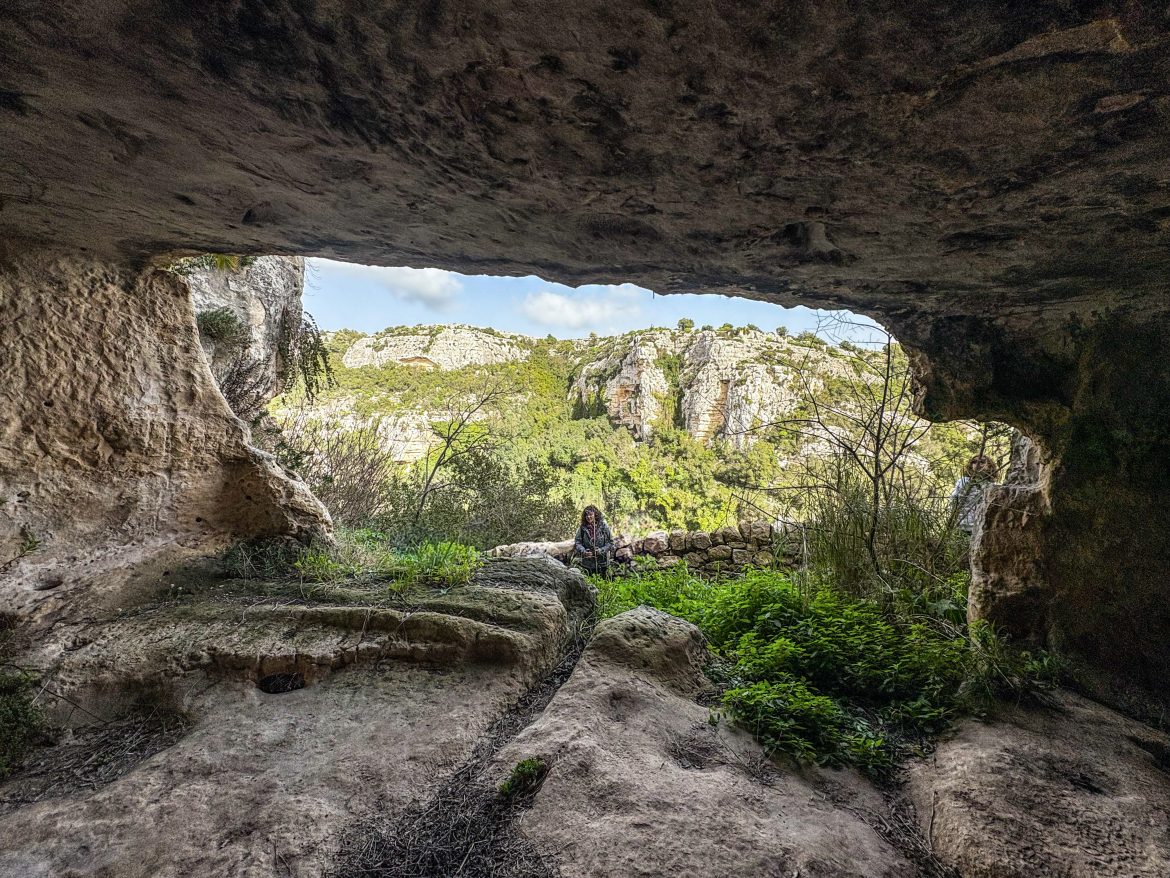
Cava d’Ispica is a valley carved out of limestone that represents one of the most important archaeological areas in Sicily. This place was already inhabited in prehistoric times and was a vital center until the Middle Ages. Walking along the canyon means not only admiring the beauty of nature, but also traveling back in time, encountering rock villages, ornate churches and caves used as houses or tombs.
Every corner of the Cava tells a story waiting to be discovered.

Cava d'Ispica_1

How to Reach the Cava d’Ispica

The Cava d’Ispica is located a few kilometers from Ispica and Modica, in the beautiful Terre Iblee in southeastern Sicily. The most common starting point for the excursion is the Forza di Ispica Archaeological Park, located at the southeastern end of the Cava. You can easily reach the park by car, where you will also find parking.
If you prefer to start on the north side, however, you can start at the archaeological area of Baravitalla, near Modica. Both points offer well-marked trails that wind along the canyon.

What to see on your hike

Larder Cave

One of the largest and most famous caves in the Quarry, Larderia Cave has housed dwellings and storehouses for centuries. In addition to its impressive size, you will find traces of ancient carvings on the walls, another legacy of past generations.

Necropolis of Calicantone

Among the oldest and most significant elements of Cava d’Ispica is the Calicantone necropolis, a complex of rock-cut tombs dating from the protohistoric age. These caves testify to the ingenuity of the primitive peoples who lived here, adapting the natural landscape to their living needs.

Catacombs of San Marco

These early Christian catacombs offer a window into the spiritual importance of the Quarry during the first centuries of the Christian era. Carvings and altars carved into the rock tell of a time when faith was intertwined with the need to survive in impervious environments.

Lady’s Cave and Gymnasium

One of the most striking caves in the Quarry is definitely the Lady’s Cave. It is said to have been a shelter for women during Saracen raids. Besides the legend, the cave remains an extraordinary example of cave dwellings.

Cava d'Ispica_ginnasio

The Sican Castle

Not to be missed is a visit to the Sican Castle, also known as “Castidduni.” This magical place presents itself as a fortified settlement, dating back to the late ancient period. Its strategic location offers a panoramic view of the valley and surrounding hills. The castle is an ideal spot for a break during the itinerary, giving an authentic connection with the surrounding landscape.

Cava d'Ispica_The Sican Castle

Nature Trail

For hiking lovers, the Cava d’Ispica nature trail is a must-do. Surrounded by greenery, this path among ancient caves, streams and enchanting views offers an experience that combines the pleasure of physical activity with the discovery of a magical place.

The Force Archaeological Park

At the southern end of the Cava, near Ispica, you will find the Forza Archaeological Park. Here you can explore the ancient rock settlement, with caves, dwellings and the magnificent Rock Church of Santa Maria. Its walls, still marked by faded frescoes, tell of the Byzantine influence in the area.
Next to the church is the Torre Forza, a medieval defensive structure that dominates the valley and offers incredible views for photography enthusiasts.

Cave of the Saints

Proceeding north along the canyon, you will find the striking Cave of the Saints, a series of rock-cut tombs decorated with rudimentary frescoes depicting sacred figures. This place, shrouded in an aura of mystery, is a rare example of rock-cut funerary art.

Rock Village of Baravitalla

Further north, near Modica, is the Rock Village of Baravitalla. This ancient settlement is home to cave houses, granaries and even a church carved into the rock. It is amazing to imagine how people have lived here for centuries, adapting to nature and turning it into a safe haven.

Why visit the Cava d’Ispica?

  • To immerse yourself in unspoiled nature
    Walking along these gorges means entering an oasis of tranquility and peace, far from the hustle and bustle of cities. The wealth of flora and fauna offers a unique and relaxing spectacle.
  • To discover a thousand-year history
    From Prehistory to the Middle Ages, Cava d’Ispica has been home to different civilizations, each of which has left traces of its culture. Here it is possible to visit necropolis, rock dwellings and ancient churches carved in stone.
  • For an authentic experience in Sicily
    A hike in the Cava d’Ispica is not just a day of trekking. It is a journey through time that invites you to slow down and listen to the whispers of an ancient Sicily. Nature lovers, history buffs and anyone seeking an authentic experience will find a perfect retreat here.
    La Cava remains a destination little traveled by mass tourism, ideal for those seeking authentic experiences and wanting to connect with the truest soul of this land.

Hiking tips

  • Clothing and footwear: Wear hiking boots or comfortable sports shoes, and bring light but layered clothing, as the temperature may vary.
  • Water and snacks: The walk in the Quarry can be strenuous, so bring water and some energy snacks to stay hydrated and energized.
  • Camera: To capture the breathtaking scenery and historical sites.
  • Local guide: If possible, rely on an experienced guide. He or she will help you discover curiosities and unique details that you might otherwise miss.

Visiting it is not just about discovering its historical secrets or falling in love with the stunning views. The heart of this adventure is connecting with yourself, with the people you will meet in the most remote corners of Modica or Ispica. This is the Sicily to discover for those who explore at a slow pace.

Sports activities and moments to remember

For the more adventurous, the Cava also offers activities such as trekking, birdwatching and even rock climbing. Immersed in the tranquility of nature, you can reconnect with its slow rhythms and breathe in the essence of Sicily away from the hustle and bustle of modern life.
Imagine ending the day with a picnic under a sky of stars, surrounded by the silence and beauty of the Cava, a moment that will become part of your most precious memories.

Cava d'Ispica_ginnasio

Plan your trip to the Ispica Quarry with us.

Planning a visit to the Cava d’Ispica is one of the best experiences you can give yourself. Casa Farlisa, with its strategic location nestled in the heart of the Iblei , is the ideal starting point for this adventure.
Let Casa Farlisa make your experience even more special by enriching it with personalized guidance.
Plan your next adventure with us at Casa Farlisa and immerse yourself in the unique magic of this timeless area.

The time required for a full visit is about 8 hours.

Check out all the articles in our blog.

Discovering Etna among nature, sports, history and flavors

Have you ever dreamed of exploring a place where the power of nature meets history, culture and authentic flavors? Welcome to Mount Etna, the highest active volcano in Europe, a place that gives unique emotions to anyone who ventures there. From its towering eruptions to the quiet beauty of its vineyards, Etna is one of the most fascinating and varied destinations imaginable.
At Casa Farlisa, we are dedicated to helping you experience the most authentic Sicily, and today we want to take you on a journey of discovery of Etna’s wonders, providing valuable insights and advice for an unforgettable visit.

Despite its reputation as an active volcano, Etna is considered relatively safe for visitors, thanks to careful vigilance and constant monitoring. Experts observe every slight variation in volcanic activity, ensuring that excursions take place under the safest conditions. In addition, areas accessible to the public are carefully demarcated, taking into account the most stable and least risk-prone areas. Visiting Mount Etna with expert guides ensures a fascinating and well-organized experience in which nature shows its spectacular side, without danger to those who decide to explore it.

The history and geology of Etna

Etna, with its majesty, has a geological history that is intertwined with the very evolution of the Earth. Its formation is estimated to have begun about 500,000 years ago, when a series of underwater eruptions gave rise to the first volcanic deposits in the area. Over the millennia, successive eruptions have helped shape its unique landscape, alternating between phases of intense activity and periods of relative quiet.

Its location on the African tectonic plate, which collides with the European plate, is the main driver of ongoing volcanic activity. This dynamism has made Etna one of the most important areas of study for volcanologists around the world, offering a privileged look at the primordial forces shaping our planet. Its lava flows, ancient glaciers and ever-changing craters tell us a story of power and transformation that never ceases to amaze.

Sartorius Mountains
Sartorius Mountains_1

Etna is not just a volcano, but a tale of millions of years of natural transformations. From time immemorial, its eruptions have shaped the Sicilian landscape and enriched the soil, making it fertile and unique. In Greek mythology, the forge of Hephaestus, the forging god, was located here, fueled by the fury of its eruptions. Walking along its craters is like walking through living pages of history and legend.

Must-see points of interest

The summit craters

Etna’s summit craters represent the most spectacular and fascinating part of this active volcano. They are a group of huge openings found at the summit, from which smoke, gas and often lava flows emerge. Each crater has its own unique history, shaped by millennia of volcanic activity. The Central Crater, Northeast Crater, Southeast Crater, and New Mouth stand as veritable windows to the Earth’s fiery heart. Observing these mighty natural manifestations up close inspires a mixture of wonder and respect, offering an intimate connection with Nature’s most primitive and powerful forces. During the clearest days, breathtaking views from the summit craters sweep down to the sea and surrounding lands, making for an unforgettable experience.

For adventure seekers, the summit craters are the beating heart of Mount Etna. To climb up there, accompanied by expert guides, is to immerse oneself in another world of moonscapes and sulfurous vapors. A view that leaves you breathless.

The Bove Valley

oxbow valley

One of the most striking areas is the Valle del Bove, a huge volcanic depression. Perfect for trekking enthusiasts, this place offers breathtaking views and the chance to observe the traces of ancient lava flows.
This extraordinary valley, characterized by imposing walls of volcanic rock, is one of the most fascinating places on Etna. Valle del Bove, located on the eastern slope, looks like a huge natural amphitheater, created by millennia of eruptions and colossal collapses. Walking inside it is like taking a plunge into Etna’s geological past, surrounded by landscapes that alternate between ancient lava flows and more recent paths shaped by Nature’s primordial force. Its majestic size and the silence that reigns there give a sense of peace and awe to those who visit. At every step, one is enraptured by the wild beauty and color variety of the volcanic rocks, which range from deep black to iron red. The Bove Valley tells, in all its magnificence, the long and fascinating history of Etna.

Etnean Villages

The Borghi Etnei represent real jewels set between the slopes of Mount Etna and the coast. Each with its own unique history, traditions and characteristics, they offer the visitor a journey through time and the culture of this extraordinary land.

Zafferana Etnea

Known as “the Pearl of Etna,” Zafferana Etnea is famous for its breathtaking panoramic views and food and wine delicacies. The town, surrounded by green woods and vineyards, comes alive especially during the Ottobrata, an event that celebrates typical local products such as honey, wine and pistachios. Its proximity to the volcano makes it an ideal starting point for excursions.

Milo

Small and charming, Milo is famous for the purity of its air and the production of excellent white wines, such as the famous Etna Bianco DOC. This village is also a paradise for nature lovers, thanks to the trails that wind through the surrounding woods. It is also known for the many cultural events that enliven its streets during the summer months.

Linguaglossa

Linguaglossa, a charming village located on the northern slope of Mount Etna, is prized for its lava stone architecture and alpine traditions mixed with Sicilian warmth. The town is a popular destination for sports enthusiasts, thanks to the nearby Piano Provenzana ski resort, which offers the unique experience of skiing overlooking the sea.

Randazzo

Randazzo is a medieval village that retains the charm of antiquity. Its cobbled streets and churches built with lava stone tell of a glorious past. Situated at an ideal altitude, Randazzo is enveloped by lush vineyards and is a center of excellence for Etna wine production.

Trecastagni

This village, whose name means “Three Chestnut Trees,” is known for its rich religious and artistic heritage. The Basilica of San Nicola is one of the main attractions, combined with the many patronal festivals that enliven the village throughout the year. Trecastagni is also a place for relaxation, where one can enjoy natural scenery and a welcoming atmosphere.

Each Etnean village is full of stories to tell, scents to breathe in and landscapes to admire, inviting anyone to discover the authentic heart of Sicily.

Sports activities and nature trails

Etna, with its majesty and charm, offers an incredible variety of sports and hiking activities suitable for all types of visitors. For hiking enthusiasts, nature trails lead through unique landscapes of ancient lava flows, lush forests, and breathtaking views. Trails such as the Donkey Back Trail or the Mount Zoccolaro Trail are among the most popular for exploring unspoiled nature.

Those who prefer a more dynamic experience can try their hand at trekking to the summit craters, a fascinating activity that allows them to feel the living breath of the mountain. For mountain bikers, Etna offers adventurous routes, including steep climbs and adrenaline-fueled descents. During the winter, on the other hand, it is possible to ski and snowboard on the slopes of the mountain, a unique experience where the whiteness of snow meets the blackness of lava.

Every activity on Etna allows you to fully immerse yourself in the extraordinary beauty of this volcano, being amazed by the power of nature.

Etna doesn’t just offer postcard views; you can experience nature actively here. From hiking or mountain biking to skiing during the winter, the volcano suits every season and passion. And for those who want something more adventurous? Try an ATV tour or a climb up the side craters.

Etna gastronomy and wines

The volcanic land of Etna is synonymous with authentic food and wine excellence. Some of Italy’s best wines are produced here thanks to native grape varieties such as Nerello Mascalese and Carricante. A wine tasting at one of the area’s many wineries is an experience that tickles the senses and enriches the soul.

Etna food and wine products

Etna, with its fertile, mineral-rich soil, offers a variety of food and wine products that reflect the richness of this extraordinary land. In addition to renowned wines, delicacies that combine tradition and authenticity are produced here.

Etnean Wines

Among the most famous fruits are Bronte pistachios, the so-called “green gold,” used to prepare creams, desserts, sauces and even ice cream with an unmistakable flavor. Another protagonist of the Etna table is honey, produced in different variants such as millefiori, citrus and eucalyptus, used both in confectionery and as a refined ingredient in savory dishes.
Chestnuts from the Etna slopes are another beloved typical product, perfect for soups or desserts, as are walnuts, equally famous for their quality. Not to be forgotten, then, is the fruit grown at the foot of the volcano, such as the Mascalucia cherries, mouthwatering and juicy, or the intense Sicilian blood oranges, a regional pride.

Finally, Etna is also famous for its cheeses, pecorino and ricotta with authentic and intense flavors, often accompanied by local jams or honey. Every bite of Etna’s products tells a story of tradition and deep connection to the land, giving those who taste them an authentic multisensory experience.

Then don’t forget the typical products such as Etna porcini mushrooms, chestnuts, and honey. Each bite will tell you a story of tradition and passion.

Unique curiosities and peculiarities

Did you know that Etna is home to a cave carved entirely out of lava, the “Serracozzo Cave”? Or that its eruptions, observed even from space, have attracted scholars and tourists from all corners of the world? This place embodies the perfect symbiosis of mystery and science.

Serracozzo Cave is a true natural wonder located on the northeastern slope of Etna. It is a lava flow gallery formed during an eruption in 1971, a spectacular example of how the power of nature can create extraordinary environments. Access to the cave is at an elevation of about 1,700 meters, reached via paths immersed in a unique landscape of expanses of solidified lava and forest vegetation.

Upon entering the cave, one is fascinated by the surreal atmosphere created by the smooth walls and the dark colors of the solidified lava, which seem to tell the tumultuous story of the eruption that generated it. The interior path is characterized by narrow passageways and wide spaces that open up unexpectedly, allowing glimpses of striking views, the light penetrating from the entrance illuminates small details in the wall reliefs, accentuating the impression of being in a work of art sculpted by nature itself.

The Serracozzo Cave is not only a place of extraordinary beauty, but also a perfect destination for geology and volcanology enthusiasts, who can observe the evidence of volcanic processes up close here. To visit this cave is to immerse oneself in an out-of-the-ordinary experience, a journey into the heart of the earth that leaves an indelible memory.

Etna volcano

How to plan a perfect trip to Mount Etna

At Casa Farlisa we want to make your Etna experience simple and memorable. Here’s how we can help you plan your adventure:

  1. Booking local guides: We collaborate with experienced Etna connoisseurs who will guide you through craters, routes and secret histories.
  2. Tailor-made itineraries: Whether you prefer a sports excursion or a food and wine day, we will create a route that meets your wishes.
  3. Exclusive tastings: We will offer visits to selected wineries and authentic restaurants to savor the flavors of Etna.
  4. Personalized travel advice: From the best time to visit the volcano to essential accessories, you will get all the advice you need.

Discover Etna with us

Etna is more than just a tourist destination. It is a multisensory experience that combines nature, history, adventure and taste.
Ready to discover the wonders of Etna? Explore them with our exclusive guidebook and turn it into your next unforgettable travel chapter.
Welcome to an adventure that will leave you speechless.

The guided tour can be conducted over the course of a day.

Request our trusted guide

Marzamemi, ancient seaside village

Marzamemi is a small and charming seaside village located on the southeastern coast of Sicily, in the territory of the municipality of Pachino. Its history is rich and varied, inextricably linked to the sea and its resources.
Marzamemi is a small fishing village with a rich and fascinating history dating back to Roman times, but it was in the Arab period that its name, derived from the Arabic “Marza” (port) and “Memen” (small), began to take shape. The history of the village is deeply rooted in fishing and fish processing, particularly tuna, activities that have marked the economy and culture of the place.
The historical heart of Marzamemi is linked to the “tonnara,” one of the oldest and most important establishments in the entire Mediterranean. Founded as early as Arab times, the tonnara reached its peak under the Princes of Villadorata in the 17th and 18th centuries.
Specifically, the real transformation of Marzamemi began in 1630, when the tonnara, one of the most important in the Mediterranean, was built. The structure not only attracted fishermen from all over Sicily, but became a vital hub for the village’s economy, especially during the tuna fishing season. The buildings that made up the tuna fishery, including the imposing palace and the fishermen’s cottages, are emblematic examples of the architecture of the time.
Over the centuries, Marzamemi has seen multiple dominations, from Arab to Norman to Spanish. Each culture has left its mark on the architectural and cultural fabric of the village. In the 18th century, under the princes of Villadorata, nobles of Noto, the palaces and cottages that now dot the historic center were built, adding further charm to the village.
With the decline of tuna fishing during the 20th century, the tuna fishery gradually lost its economic importance, but Marzamemi has been able to reinvent itself as a tourist destination. The village has retained its charm, with Piazza Regina Margherita serving as the nerve center, surrounded by historic buildings, including the church of San Francesco di Paola, the palace of the Princes of Villadorata, and the old fishermen’s cottages, now often converted into restaurants, bars, and stores selling local products.

Marzamemi
The Marina of Marzamemi

Attractions

The beating heart of Marzamemi is undoubtedly Queen Margaret Square. This square, is surrounded by historic buildings that house cafes, restaurants and local craft stores. Its lively ambiance makes it an ideal place to savor the village atmosphere, sipping a coffee or enjoying an ice cream while children play freely.
The Church of St. Francis of Paola, also located in the square, dates back to the 18th century and is a spiritual reference point for the village’s fishermen. Not far away is the ancient Tonnara di Marzamemi, which today serves as a testament to the village’s past and is used for cultural events, including weddings and concerts.
For those who love the sea, nearby beaches such as San Lorenzo or the Vendicari nature reserve offer crystal-clear waters and golden sand, ideal for a relaxing day in the sun or for activities such as snorkeling and diving.

Events

Frontier Film Festival in July. This annual festival is a celebration of independent cinema with a focus on films that explore themes of borders and migration. Screenings take place at various locations around the country. The festival is one of Marzamemi’s best-known events and transforms the village into an outdoor stage for international cinema. This event attracts filmmakers and enthusiasts from all over the world.
Marzamemi Wine Fest in August. It is a wine festival that attracts local and international producers. Guests can taste regional wines accompanied by typical Sicilian dishes.
Feast of St. Francis of Paola in the month of September. It is the patronal festival of Marzamemi, which includes a maritime procession, live music, and fireworks, thus celebrating the patron saint of fishermen. During the festival, you will also be able to taste copious amounts of fresh fish cooked expertly.

Typical products

Marzamemi is famous for its culinary delights, which reflect the richness of Sicilian gastronomic traditions and the freshness of its marine ingredients. One of the most emblematic products is undoubtedly tuna, traditionally caught in the surrounding waters and processed in the village’s ancient tuna fisheries. Botargo (dried and salted tuna roe) and mosciame (dried tuna fillet) are delicacies that attract gourmets from all over the world.
In addition to fish, Marzamemi is renowned for its wines. Well-tended vineyards and cozy wineries offer tastings and tours, giving visitors the opportunity to immerse themselves in the local wine culture.

Sicilian sweets, such as cannoli, are ubiquitous in the village’s pastry shops, ensuring a sweet ending to every meal. The local market also offers a wide range of fresh agricultural products, such as cherry tomatoes and capers, essential in Sicilian cuisine.

Unique Features of the Village

Marzamemi
Glimpses of Marzamemi

Marzamemi stands out not only for its scenic beauty and culinary delights but also for its commitment to the preservation of cultural and architectural heritage. The village has kept its original structure intact, with pastel-colored houses and narrow streets that invite relaxing walks.
Residents are proud of their roots and actively work to preserve traditional fishing techniques, while integrating tourism as a vital component of the local economy.
Marzamemi offers a unique experience for visitors of all ages, combining history, culture, natural beauty and gastronomy in an authentic Sicilian village.

The time required for a visit is about 60 minutes.

Discover all the articles dn our blog.

The small lakes of Cavagrande del Cassibile, a natural paradise

A tour of the Laghetti di Cavagrande del Cassibile offers an unforgettable experience in the heart of eastern Sicily. This protected natural area, located in Avola, in the province of Syracuse, is famous for its spectacular canyons carved over millennia by the erosive action of the Cassibile River. With its enchanting natural crystal-clear water pools, hidden waterfalls and lush vegetation, Cavagrande is a paradise for nature lovers, trekkers and photographers.

History and geography

The formation of Cavagrande del Cassibile dates back about 5-6 million years, during the Late Miocene and Pliocene, when tectonic movements and fluvial erosion began to shape the landscape. This process created a canyon about 300 meters deep, one of the largest canyons in Europe, characterized by steep cliffs and a rich variety of flora and fauna.

Cava-Grande-Cassibile-canyon
The Canyon of Cavagrande del Cassibile
Laghetti-Cava-Grande-del-Cassibile
The small lakes of Cavagrande del Cassibile seen from above
Quarry-Great-of-the-Cassible-Paleolithic
Cavagrande del Cassibile paleolithic settlements

The Cavagrande area has been inhabited since prehistoric times, as evidenced by archaeological findings dating back to the Paleolithic period. Over the centuries, the site has been used by various civilizations, including the Siculians, Greeks, and Byzantines, because of its natural resources and strategic location. Necropolis and the ruins of ancient settlements testify to the historical importance of this area.
Geographically, the reserve covers an area of about 2,700 hectares.
The Cassibile River, which flows through the quarry, is the main architect of the creation of the ponds. These small freshwater basins were formed by river erosion, which carved out small natural pools in the limestone rock. The crystal-clear water in the ponds varies in depth and temperature, offering refreshment to visitors during the hot summer months.

Biodiversity and environmental protection

Cavagrande del Cassibile is a valuable habitat for many species of plants and animals, some of them endemic and protected. The diversity of microenvironments, from wetlands to rock walls, supports the presence of rich and varied flora and fauna. To preserve this natural heritage, the area was declared an Oriented Nature Reserve in 1990, with the aim of protecting biodiversity and promoting scientific research and environmental education.

The trekking experience

Today, the Laghetti di Cavagrande del Cassibile are a popular tourist destination, attractive not only for their natural beauty and refreshing bathing opportunities but also for their trekking, birdwatching and photography opportunities.
The tour begins with a route that, although it can be challenging, rewards visitors with breathtaking views and the opportunity, once they arrive, to soak in the cool, clear waters of the lakes. The trail descends along the canyon, passing through varied natural environments rich in biodiversity. Along the way, various species of plants and animals can be observed, witnessing the rich local flora and fauna.
The trail has sections of varying difficulty, and requires good physical fitness, as well as appropriate footwear. It is important to leave equipped in addition to shoes and good physical training, with water, hat and sunscreen, especially in the summer months. The beauty of this place I assure you is absolutely worth the trip.

Cava Grande del Cassibile
The path of Cavagrande del Cassibile

The magic of ponds

Cava-Grande-Cassibile
One of the pools with waterfalls at Cavagrande del Cassibile

Once at the ponds, visitors can choose to relax on the rocky shores, swim in the cool waters or explore additional waterfalls and natural pools. Here the landscape is transformed into a veritable aquatic paradise of crystal-clear waters. The ponds are surrounded by limestone rocks and lush vegetation, creating a magical and relaxing atmosphere. You can explore several natural pools, each with unique characteristics, and enjoy the tranquility and unspoiled beauty of the place. Observing wildlife up close, such as dragonflies circling over the water and small fish swimming in the pools, further enriches the experience.
It is advisable to bring a packed lunch, as there are no food services within the reserve.
For those seeking a more in-depth experience, guided tours offering insights into the geology, history, and ecology of the area are available. These tours are an excellent opportunity to learn more about the importance of conservation of these natural environments and local traditions.

Conservation, environmental compliance future challenges

Cavagrande del Cassibile is a natural treasure that requires active engagement in its conservation. Visitors are asked to follow park rules, avoiding leaving trash and harming flora and fauna. It is essential to adopt a sustainable tourism approach, appreciating the beauty of the place without compromising its integrity. Local authorities and environmental associations play a crucial role in protecting this natural wonder.
Visiting the small lakes of Cavagrande del Cassibile offers a unique experience, combining the adventure of trekking with the wonder of unspoiled natural landscapes. This place is not only an escape from daily routine but also an opportunity to reflect on the importance of nature conservation. Whether you are an avid hiker, nature lover or simply looking for a place to relax away from the hustle and bustle of daily life, Cavagrande is an invitation to rediscover the value of silence, contemplation and adventure, which is essential for anyone who wishes to connect with nature in an authentic and respectful way.

Cava-Grande-del-Cassibile
The small lakes of Cava Grande del Cassibile
Cava Grande del Cassibile
The largest of the ponds at Cava Grande del Cassibile

The growing popularity of the Cavagrande as a tourist destination presents challenges for its conservation. Balancing accessibility for visitors with protection of the fragile ecosystem is critical. Environmental awareness initiatives, regulation of access, and promotion of sustainable tourism are essential to ensure that future generations can continue to admire and respect the small lakes of Cavagrande del Cassibile.

The descent time is about 50 minutes, the ascent depending on the speed can take up to 2 hours, with steep gradient.

Discover all the articles dn our blog.

What to see in Modica

Here is what to see in Modica during a visit, the main attractions of cultural interest that should not be missed.

The Cathedral of San Giorgio

A symbol of late Baroque Sicilian architecture, the Cathedral of San Giorgio, with its breathtaking view, is one of the most iconic sites to visit in the Iblean region and is listed on the UNESCOUNESCO.
Its construction is believed to have begun in 1090, commissioned by Count Ruggero d’Altavilla, following the Norman conquest of Sicily. The splendid tower-like façade, standing 62 meters tall, was built beginning in 1702 and completed in 1842, when the iron cross was placed on the spire.
For the construction of the first two orders of the façade, the architects drew inspiration from Dresden Cathedral, Katholische Hofkirche, completed in 1753. Modifications were made to the 18th-century façade—for which no drawings have survived, but which had withstood the 1693 earthquake—through the partial demolition of certain areas, which were subsequently rebuilt.
To complete this imposing religious complex, a staircase of 181 steps was built between 1814 and 1818; the upper section facing Corso San Giorgio was completed first, while construction of the lower section began in 1874 and was completed in 1880.
This magnificent staircase leads to the church’s five portals, serving as a prelude to the five interior naves. On the front side, which offers an extraordinary view, the complex is embellished by a terraced garden that winds across several levels, called the Orto del Piombo, flanked by the staircase, creating a scene reminiscent of Trinità dei Monti in Rome.

Cathedral of San Giorgio


Inside, the church has a Latin cross plan with three apses beyond the transept and is divided into five naves by twenty-two pillars adorned with Corinthian capitals. The vaulted ceilings are decorated with a cycle of paintings and decorative stucco work, and the dome rises to a height of 36 meters. Above the inscribed arch of the main portal, on the inner counter-façade, there is a coat of arms depicting the armor of Count Ruggero d’Altavilla, the church’s founder.
The Cathedral of San Giorgio is located on the way up to Modica Alta, in the historic center, and is easily accessible on foot via the beautiful panoramic staircase.

What to see in Modica_Interior of S. Giorgio Cathedral
A. Sessa, interior of San Giorgio Cathedral

The Cathedral of San Pietro Apostolo

The Cathedral of St. Peter the Apostle is the city’s mother church, along with the Cathedral of St. George. It ranks among the oldest religious buildings; in fact, its initial construction dates from 1301 to 1350. The current building was largely rebuilt due to damage sustained over the centuries and during the disastrous earthquake of 1693.
Like the Cathedral of St. George, it is an example of late Sicilian Baroque architecture. Its façade is spectacular, featuring a series of columns and elaborate decorative details. Inside, it houses a collection of priceless works of art, including frescoes, statues, and the altars that adorn the church’s interior. In the left aisle stands the Mazara Chapel, which serves as the Parish Museum—open to the public today—and preserves the church’s artistic heritage. Chasubles, monstrances, paintings, and statues from the 16th century
It features a tall, square, and imposing bell tower, arranged over three levels from different eras—a testament to its historical stratification—which dominates lower Modica. At the very top, the bell tower appears incomplete due to the absence of its customary dome. Its main bell, “Petra,” is—along with “Ippolita, ” its twin in the bell tower of San Giorgio—the largest in this Sicilian town.
A beautiful staircase, flanked by statues of the 12 apostles and consisting of three flights, leads to the churchyard from Corso Umberto I.
The Church of San Pietro is located in the historic center of Modica, so it is easily accessible on foot.

What to see in Modica_S.Pietro
Dagnija BerzinaIl, St. Peter’s Cathedral

The Castle of the Counts of Modica

What to see in Modica_Santa Maria di Betlem
St. Mary of Bethlehem with the Castle of the Counts in the upper left background

The Castle of the Counts of Modicais one of the most important historic buildings in the area. It stands atop a rocky outcrop and for centuries served as the seat of political and administrative power for the historic county of Modicafor centuries.
Today, the castle is the result of extensive reconstruction work carried out not only after the 1693 earthquake but, above all, after 1779, when the project to rebuild the residence of the County Governor was undertaken.
It was originally designed as a fortress but underwent modifications at various times between the 8th and 19th centuries. The structure was built in a strategic location on a rocky promontory, with two of its three walls naturally impregnable due to their sheer drop. A 14th-century polygonal tower remains on the exterior.
Recent archaeological excavations, for the project to convert part of the castle into a convention center, are uncovering artifacts from the Early Bronze Age, the Hellenistic period, the Roman period, the Arab period, to its use for administrative and military purposes.

In the inner courtyard, medieval prisons can be visited, divided by type of prisoners. Here in 1930, on the ruins of the church of San Leonardo, they built the church of Madonna del Medagliere, to comfort prisoners. In the same area can be seen the remains of the Count and Governor’s private chapel, the church of San Cataldo, whose bells tolled the hours in the city.
Collapsed due to the 1693 earthquake, or demolished to make way for urbanization, nothing remained of the 5 towers, 4 gates and ancient walls.
Among the main attractions of the castle is the breathtaking view from the top of the towers over the city and its surroundings.

Chocolate

Modica is also famous for its unique chocolate, made using an ancient technique that preserves its grainy texture. Visit one of the local chocolate shops, such as Antica Dolceria Bonajuto, is a culinary experience not to be missed. You can sample the chocolate in many different forms—all made according to the traditional recipe—before purchasing it.
The Modica Chocolate Museum is a fun and informative place where you can explore the history of Modica chocolate, as well as its ancient roots in Sicilian culinary culture.
The museum showcases the traditional process of making Modica chocolate. Discover how cocoa beans are processed and transformed into chocolate without undergoing conching—a step that gives Modica chocolate its unique, grainy texture. Modica chocolate is handmade using traditional methods. The use of simple ingredients like cocoa and sugar makes the production process significantly different from that used in other parts of the world. Here you can also sample different varieties of chocolate, each with its own unique flavor and distinctive texture. A delightful experience for the senses.

More

Among the many attractions to visit is the church of Santa Maria di Betlem and the Rock-Cut Church of San Nicola Inferiore, dating from the 11th and 12th centuries.
Take some time to explore the city, losing yourself in the narrow city alleys and admiring the limestone architecture, the ornate facades, and the picturesque views. Head to one or more of the numerous viewpoints to take photos and admire the scenery. The Garibaldi Theater, built in the mid-19th century in the Neoclassical style, hosts live theater and musical performances. Palazzo Polara, built in the late 18th century, next to the Cathedral of San Giorgio. Palazzo Castro Polara Grimaldi in Modica, overlooking the Orto del Piombo. The clock tower, which has been in operation since 1725 and continues to function today.

A full tour of Modica takes about 12-16 hours


Would you like to visit Modica and the Val di Noto while staying at a private villa near the sea?

Casa Farlisa is located in Scicli, conveniently situated for visiting Modica, Sampieri, and the main Baroque destinations in southeastern Sicily. Discover the villa with a private pool and book directly on the official website.

Check out all the articles on our blog.

A new experience, a field trip to Paradise Quarry.

Along the provincial road from Modica to Rosolini, nestled in the typical Modican countryside but hidden in a valley, lies Cava Prainito , also known as Cava Paradiso. An enchanting place with wild and unspoiled nature, with special features unique to the area.

The Prainito stream , a right tributary of the Tellaro, flows through the quarry. The stream along its course, forms small lakes and waterfalls, which are “intertwined” with dense riverine-type vegetation. Here rather rare species to be found in the area such as plane tree, poplar, holm oak, and the rocks of limestone nature create true spectacles of nature.

The dense wild vegetation often hides and makes the most beautiful places in the quarry and the rich fauna, especially from the fish point of view, almost inaccessible. The native “Macrostigma trout ” make Cava del Prainito a truly unique place.

Cava Prainito
Cava Prainito, a natural freshwater pool to discover. Photo: ELORODISTRICT SICILY STAFF

Archaeologically, one can see settlements of the ancient Paleochristian and Castellucian civilizations, as well as evidence of the more recent past. Caves, tomb forms, old kilns for the production of lime, stairways carved into the rock and as if that were not enough, water mills.

The source of the Prainito stream, which is located in the quarry, is called “of the poor women.” The name comes from a legend, which tells of some brigands. These had imprisoned women, in the spring cave, along with a variety of treasures. One day, some vasciddari heard the women’s voices and set them free. But once out, the women, blinded by the sunlight, died, leaving the spoils to the lucky vasciddarians .

The vegetation hides transparent pools of water in Cava Paradiso. Photo: AMBRA GALASSI 2014 on Flickr

Here is a description of it by Prof. Francesco Gurrieri profound connoisseur of the Iblei places:

“A true corner of paradise, characterized by its small size, in which, however, many beauties from different aspects are concentrated. From landscape-naturalistic to geological-faunistic and floristic. A natural niche that certainly, for all the advantages it offered, did not escape the attention of ancient and modern man, so it is also a treasure trove of historical vestiges dating back to the “Castellucciana” and “Paleochristian” civilizations.

Cava Paradiso, the Prainito stream, Rosolini (SR). Photo: PEPPEPERZ

The clear waters are still home to the native “Macrostigma” trout, rainbow trout, tench and eel. Some crustaceans, such as crayfish, crabs and the interesting “Stonefish,” also abound. The river course, although small in scope and of limited development, flows among lush vegetation, constricted within a deep incision, bordered by carbonate rocks that, from the Hyblean plateau, slope down toward the African sea.

Turning our gaze to the archaeological evidence, moving through the rocky slopes, we can observe paths etched in time. Formerly a refuge for the primitive indigenous people, who certainly derived their livelihood from the quarry, around which they had built the various villages of huts.

Tombs of the Castelluccian era in Cava Paradiso. Photo: ELORODISTRICT SICILY STAFF

The sepulchral niches that attract attention are those dating back to the ” Castellucciana ” culture, which flourished in the Iblean area around 2000 BC.

The funerary hypogea, have a monumental elevation elaborated by faux pillars, or marked with simple vertical grooves. Reason why, we can connect them to Maltese megalithic architecture.
Buried in the greenery you will meet an ancient water mill of which you can see the base on which the hopper was installed, as well as the path of the SAIA. “

NOTE: Some of the content in this post originally appeared on Dario Fiore’s personal website.

A complete tour of Cava Paradiso takes about 2 to 3 hours on average.

Would you like to explore Cava Paradiso and southeastern Sicily from a private villa?

Casa Farlisa is the ideal starting point for immersing yourself in nature, history, and the charm of the authentic villages of the Val di Noto.
Discover the villa with a private pool between Scicli and Sampieri and book directly through the official website to avoid commissions.

Check out our other blog articles here.